
Importance of Indian Culture
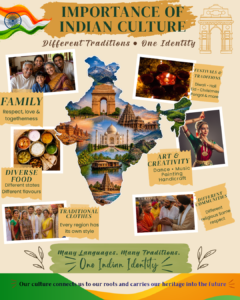
Indian culture is one of the oldest and richest cultures in the world. It is known for its different languages, traditions, festivals, food, clothes, art and way of living. Indian culture is not the same in every part of the country. Every state and every community has its own traditions and customs. Still, all these different cultures together make India a diverse and beautiful country.
One of the most important things in Indian culture is giving time to family members and respecting them. Family has an important place in the lives of many Indians. People spend time with their parents, grandparents and other family members, especially during festivals and special occasions. Respecting elders and showing love and care towards younger members are also important values taught in many Indian families.
India is a country with many languages. Almost every state has its own commonly spoken languages and local traditions. People also follow different religions, and each community has its own customs and ways of celebrating important occasions. The way people live their daily lives can also be different from one state to another. Their food, clothes and local traditions can change with the region.
For example, every state has its own famous food and traditional clothing. The food people enjoy in Punjab can be different from the food commonly eaten in Kerala or West Bengal. In the same way, traditional clothes also change according to the region. These differences make Indian culture very diverse.
However, even with so many differences, people from different states proudly identify themselves as Indian. A person can speak a different language, follow a different religion or have completely different traditions, but they are still connected through their Indian identity. This is one of the things that makes Indian culture special.
Festivals and Old Traditions
Festivals are another important part of Indian culture. India celebrates many festivals throughout the year. Some well-known festivals include Diwali, Holi, Eid, Christmas, Pongal, Baisakhi and Onam
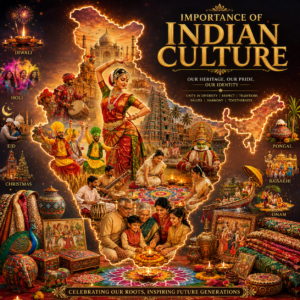
There are also many other regional festivals celebrated by different communities across the country.
Every festival has its own traditions and rituals. People may pray, prepare special food, decorate their homes, meet relatives and spend time together. Many of these rituals have been followed for a very long time and are still continued by families today.
Young people can also enjoy learning about these old traditions. Many youngsters like listening to stories about their family’s traditions from their parents and grandparents. Sometimes grandparents tell them how festivals were celebrated when they were young. These conversations help younger people understand their family’s culture and history.
Indian Art and Creativity
India is also famous for its different forms of art. There are many kinds of classical dance, folk art, music, painting and handicrafts in different parts of the country. Each region has developed its own styles and artistic traditions.
Classical and folk dances are not only forms of entertainment. They can also show stories, traditions and the history of different communities. Traditional paintings and handicrafts also reflect the creativity of Indian people.
Many traditional skills are passed from one generation to another. When young people learn about these forms of art from their families or communities, they become more familiar with their cultural roots.
Respect and Relationships
Respect is another important value in Indian culture. Children are often taught to respect their elders and to speak kindly with younger people. Family relationships are given importance, and people often try to support each other during both happy and difficult times.
Indian culture also has a strong tradition of welcoming guests. A famous phrase associated with Indian hospitality is “Atithi Devo Bhava,” which means that a guest should be treated like God. It shows the importance given to guests and hospitality in Indian culture.
Conclusion
Indian culture is much more than festivals and traditional customs. It includes family relationships, respect, different languages, food, clothes, art, music and many traditions that have continued for generations.
India has many different cultures within one country. Every state has its own identity, but people still proudly share the identity of being Indian. This combination of diversity and togetherness is an important part of Indian culture.
As time changes, some traditions may also change, but learning about our culture can help us stay connected to our roots. When young people listen to their parents and grandparents, celebrate festivals and take interest in traditional art and customs, they help keep these parts of Indian culture alive for the future.